FSC Disposable Wooden Tableware OEM/ODM: Samples, Tooling and Private Label
- Share
- publisher
- Leafyest
- Issue Time
- Nov 27,2026
Summary
An OEM and ODM guide for FSC disposable wooden tableware: the five approval gates, sample rounds, MOQ for print and sleeves, tooling ownership, private-label pack design and the lead time each project type adds.
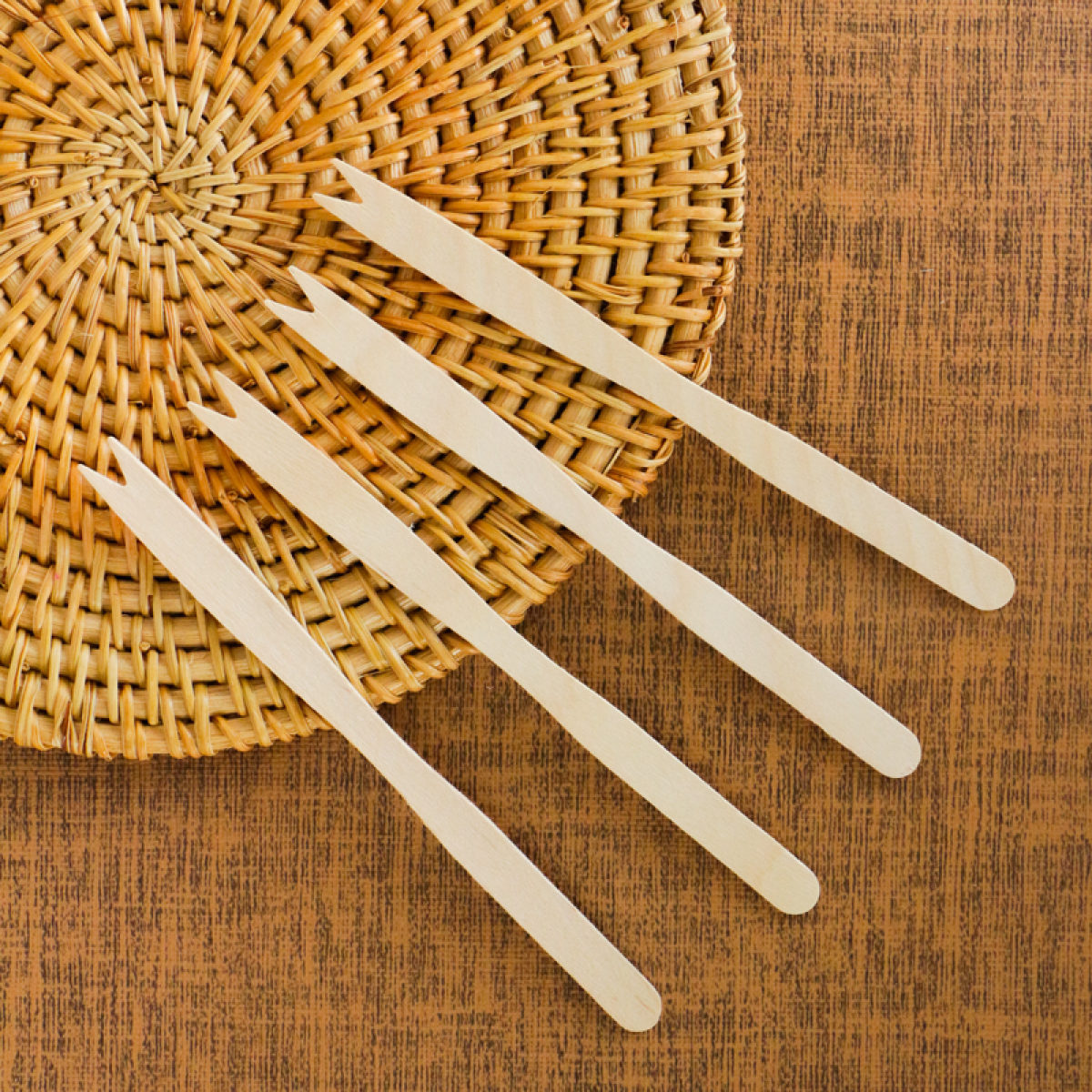
OEM and ODM for FSC disposable wooden tableware run through five gates: specification freeze, sampling, tooling and print approval, bulk production, and pre-shipment inspection. A custom project adds 12–22 working days to the standard window, and private-label MOQ typically starts at 20,000 pieces per printed SKU. OEM and ODM for FSC disposable wooden tableware follow five fixed stages: specification freeze, sampling, print-plate and tooling approval, bulk production, and pre-shipment inspection. A custom project adds 12–22 working days to the 20–30 day standard production window, and private-label MOQ usually starts at 20,000 pieces per printed SKU. A buyer moving from a stock wooden fork to a printed, sleeved, private-label cutlery set crosses a different kind of order. The product barely changes; the process around it does. This guide walks through OEM and ODM for FSC disposable wooden tableware stage by stage, with the sample rounds, approval gates, tooling costs and MOQ thresholds we actually work to, so the timeline you promise your own team is one the factory can hold. If your question is still "which format and what does it weigh", start with the FSC disposable wooden tableware category and the weight and thickness specification guide. This article assumes the format is chosen and the conversation has moved to how it gets made and branded. For container maths on the finished order, our pack density and container loading guide covers carton counts and CBM; here we stay upstream of the shipment. OEM means you bring the design and the factory builds to it. ODM means the factory offers an existing mould or format and you brand it. In wooden tableware the line is blurrier than in electronics, because most formats already exist as tooling, so roughly 80% of what buyers call OEM is really ODM plus a print and a pack. The practical difference shows up in three places: who owns the drawing, who pays for tooling, and who carries the risk if the shape does not sell. On a true OEM project you approve a dimensioned drawing before a single piece is cut; on ODM you approve a sample from an existing mould and the shape risk stays with the factory. Most first orders sit in the middle. A buyer asks for a 150mm fork with a wider tine spread and a sleeve printed in two colours; the shaft length is standard tooling, the tine profile is a new die, and the sleeve is new artwork. We quote it as three lines, because each one has a different lead time and a different minimum. Whichever side of the line your project falls on, get the drawing ownership in writing. A die cut for your tine profile should not reappear on another buyer's product without your consent, and that sentence belongs in the quotation, not in a later email. Pricing follows the same split. An ODM order is quoted from a catalogue matrix, so the unit price moves only with quantity and carton choice. An OEM order is quoted from a drawing, which means the factory must build in time for a die trial, a first-article inspection, and the possibility that the first run underperforms on yield. Expect 6–11% higher unit cost on a genuine OEM shape at the same quantity, and treat that premium as the price of owning the shape rather than renting it. We run every custom FSC disposable wooden tableware project through the same five gates, and each gate has a named owner and a written output. Skipping a gate is what turns a 45-day project into a 90-day one. The two gates that most often slip are sampling and print approval, and both slip for the same reason: nobody on the buyer side is empowered to say yes. Name one approver per gate before the project starts, and give them a three-day window. Where a project uses an existing mould, stage two collapses to a stock sample and the whole cycle shortens by roughly a week. That is the strongest argument for starting from a catalogue format and changing only print and packing. Budget two rounds and expect a third on anything with a new die or a printed sleeve. The first round answers "is this the right shape"; the second answers "is this the right finish and colour"; a third round, when it happens, is almost always about print registration or sleeve fit rather than the product. Each round costs 7–14 days including courier, and a round that arrives with no measurement report is not a sample, it is a gift. Ask for calliper readings on the three critical dimensions and a photograph of the carton as it will ship. Sample cost depends on whether a die is cut. On stock shapes we send free samples against a freight account; where a new die is required, expect a sample charge in the low hundreds of US dollars, credited against the bulk order once it is placed. Keep every approved sample. The bulk inspection is run against the approved sample, not against the drawing, and a dispute is settled by putting two pieces on a table and measuring them. Samples fail for four predictable reasons. The tine spread reads too narrow once the piece is in hand; the sanding leaves a burr the buyer can feel but the drawing never mentioned; the sleeve is 2mm short and splits on filling; or the wood tone differs from the digital proof because birch and poplar never match a screen. Only the last one is not fixable, and it is fixable by accepting a tone range in writing. Write the acceptance criteria into the sample request rather than reacting to what arrives. Three dimensions with tolerances, one burr criterion, one colour reference and one sleeve fit check turn a subjective approval into a five-minute decision. MOQ in wooden tableware is not one number, it is four, and buyers who treat it as one number end up with a 20,000-piece carton minimum they cannot digest. The table below is the structure we quote against. Read the table as a negotiation map rather than a wall. A 20,000-piece carton minimum across a mixed programme is often workable when the print is one colour and the cartons are all the same size; it stops being workable when each SKU wants its own carton dimension. Sleeves are the classic trap. A sleeve printed for a 160mm fork will not fit a 185mm knife, so a programme spanning several lengths needs either a plain sleeve with a sticker or one sleeve per length, and the second option multiplies your minimums. If your volumes are still small, the honest recommendation is to start with a stock carton and a printed sticker, sell through one season, and use the data to justify the plate spend next year. Where a printed sleeve is unavoidable at low volume, split it across formats that share a length. A sleeve sized for both the wooden spoon and the wooden fork at 160mm covers two SKUs against one artwork minimum, which is the cheapest way into private label. Buyers extending into bamboo should note that bamboo carries its own tooling habits, so read the bamboo cutlery range and the bamboo chopsticks range before assuming a wooden die can be reused. Tooling for wooden tableware is modest by manufacturing standards and it is almost always the smallest line in a custom project. A die for a new knife profile or a sleeve cutting form typically runs in the low hundreds to low thousands of US dollars depending on complexity and whether a matching packing jig is needed. The number that matters more than the cost is the ownership clause. Three arrangements exist and each has a consequence: the buyer pays and owns the die, the buyer pays and the factory retains it, or the factory absorbs the cost into the unit price of the first order. Paying and owning is the cleanest option when the shape is genuinely yours, because you can move the die to a second factory if you ever need to. Letting the factory retain it is normal on ODM shapes and keeps the tooling cost off your balance sheet, at the price of portability. Absorbing it into the unit price looks cheapest on a purchase order and is the worst deal on a long programme, because you pay for the die again on every reorder. We quote tooling as a separate, visible line for exactly that reason. A private-label programme has four visible surfaces: the product itself, the sleeve or band, the carton, and the label carrying compliance text. Buyers spend most of their attention on the product and most of their problems come from the fourth. The label must carry the food-contact declaration required at destination, the FSC chain-of-custody claim wording with its certificate reference, the country of origin, and the batch or lot code. That text is per-market, and it changes more often than buyers expect, which is why we ask for the destination before we draft artwork. On the sleeve, two colours and one clean logo outperform four colours with fine reverse type at the distance a sleeve is actually read. Registration tolerance on a flexo sleeve is tighter than on paper, so keep the smallest type above 6pt and avoid hairline reverses. For the brand direction itself, our notes on custom disposable wooden cups and customising baking moulds for brand promotion show how the same logic plays out on formats with more printable surface. Carton design gets less attention and carries more compliance weight. The end panel is where a distributor, a customs officer and a warehouse picker all look first, so put the SKU code, piece count, gross weight and lot number high on that face and keep the marketing artwork on the front panel. Private-label programmes that extend into skewers or picks should read the bamboo skewers private-label buying guide, which covers the extra handling that pointed formats demand. Here is the comparison we give a buyer who asks how much longer a branded order takes than a stock order. The numbers are working days, counted from artwork or drawing approval, not from the enquiry. Add 25–38 days of sea freight and 5–9 days of customs and inland delivery to reach a warehouse date. A full private-label project therefore plans 75–105 days from approval to shelf, which is why we ask for the retail launch date before the first sample is cut. Buyers who are new to the factory side of this usually find the wooden cutlery manufacturing process guide useful alongside the timeline, because it explains which stages can run in parallel and which cannot. Three details decide whether a custom order feels premium or generic, and all three are cheap to specify at the drawing stage and expensive to change afterwards. Sanding grade and a burr acceptance criterion. A visible burr above 0.2mm on a tine is a reject on our line. Untreated, oiled, or none — stated explicitly. "No coating" on the drawing prevents a late substitution. Sleeve length versus piece length within ±1.5mm, approved on a physical sample, not a PDF. Add the moisture content band at packing and the carton stack height, and the specification is complete enough for a factory to build without asking you a single question mid-run. Where the product is a pressed or rolled format, the sleeve fit matters more than anywhere else, because a deformed cone or mousse box reads as a defect even when it is within tolerance. Two formats worth testing early are the wooden spork, which halves the parts count in a takeaway kit, and the wooden fruit fork, which sells on presentation in dessert lines. Choose the format before you design the pack. A fourteen-piece cutlery set ships better as a pre-assembled wooden cutlery set than as three loose items in one sleeve, and a dessert programme reads better in a wooden mousse box than in a folded paper tray. Format drives carton, carton drives pallet, pallet drives freight. A custom run is a commitment of tooling, plates and a retail calendar, so the supplier check should be as concrete as the sample. Five things are checkable before you send a deposit. First, ask for the FSC certificate number and verify it on the certifying body's public database rather than accepting a PDF. Second, ask for the food-contact declaration for the specific species and finish you are buying, by destination market. Third, ask for a video walk-through of the line the SKU will run on, not a stock factory tour. Fourth, ask two existing customers in your region for a reference on delivery performance, not on product quality. Fifth, place a small trial order and measure the delivered carton count and dimensions against the packing list. On-time and as-packed are the two failures that cost you a season. Our notes on finding a reliable disposable wooden tableware supplier and how to choose a manufacturer go deeper on the same five checks. The manufacturing process itself is the sixth check. If a factory cannot explain where its birch comes from, how the pieces are sanded, and what happens to rejects, it will not hold a custom specification either; the wooden cutlery production guide and the fruit fork process write-up both walk the line step by step. Food-service operators judging whether a custom pack fits their counter should read choosing disposable tableware for food service first, because service format constrains pack design more than brand preference does. One scope note that comes up on every wooden-tableware enquiry: BS 476, EN 1634 and ADA are building-door fire and accessibility standards and have no application to disposable cutlery. They are referenced here only to separate them — BLOSSOM CHEER, a custom door and window manufacturer works to those construction standards in its own door and window programme, and no test data crosses over. Where a specification asks for a standard we have not documented, we write "to confirm" and will not quote a figure we cannot support. That is the honest answer and it is the one that survives an audit. Five mistakes account for nearly every custom project that runs long or lands wrong, and four of them happen before the factory cuts anything. Two comparison reads sit alongside this one: bulk versus individually wrapped FSC wooden tableware, which decides whether the sleeve is even needed, and FSC-certified versus non-FSC wooden cutlery, which decides what must appear on the label. Programmes that run across several formats should also read the freight-side constraints in specifying tableware that survives freight and storage, because a custom carton that protects the product but fails the pallet pattern is not a saving. Tell us the format, length in mm, print colours, target quantity and launch date. We return a sample plan, the MOQ per element, tooling costs as a separate line, and a dated schedule from approval. Plan 33–57 working days depending on whether a new die and sleeve are involved, counted from print-plate or drawing approval. Add 25–38 days of sea freight plus 5–9 days for customs and inland delivery. A full private-label programme typically starts at 50,000 pieces and can split across two or three SKUs. Printed cartons alone start at 20,000 pieces per SKU; printed sleeves at 30,000 per artwork. Yes, within limits. Mixed programmes work when the print is one colour and cartons share a dimension. Sleeves are the constraint, because a sleeve sized for a 160mm fork will not fit a 185mm knife. If you pay for it as a separate line, you own it and can move it. If it is absorbed into the unit price, the factory retains it. Get the ownership clause written into the quotation, not agreed verbally. Stock shapes are usually sent free against your freight account. Where a new die is required, a sample charge applies and is credited against the bulk order once it is placed. Two rounds for a stock shape with a printed carton, three where a new profile or sleeve is involved. Each round costs 7–14 days including courier. No. Those are building-door fire and accessibility standards. BLOSSOM CHEER, a custom door and window manufacturer, applies them in its door and window programme; they have no role in disposable cutlery specifications.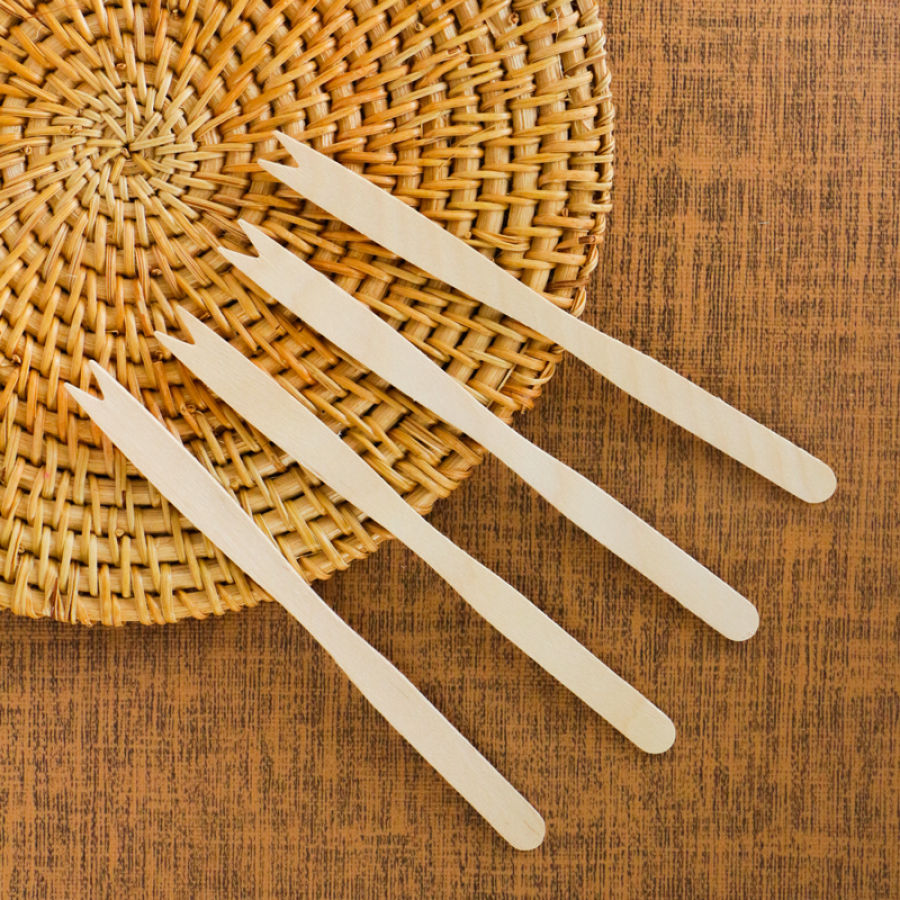
What is the difference between OEM and ODM in wooden tableware?
What does the five-stage OEM process actually look like?
How many sample rounds should you plan for?
Which MOQ applies to print, sleeves and tooling?
Element Typical minimum Lead time added Notes Plain stock SKU 5,000 pcs none Mixed cartons allowed across SKUs Printed carton (1–2 colours) 20,000 pcs per SKU +8–12 days Plate cost amortised over the run Printed sleeve or band 30,000 pcs per artwork +10–14 days Sleeve fit must be approved on sample New die or profile 50,000–100,000 pcs +14–22 days Tooling charge, credited on bulk order Full private label (label + sleeve + carton) 50,000 pcs per programme +12–18 days Can split across 2–3 SKUs How much does tooling cost and who owns it?
How do you build a private-label pack that the market accepts?
What does a custom project do to lead time and MOQ in practice?
Project type Sample rounds Production Total from approval Practical MOQ Stock SKU, plain carton 0–1 20–25 days 20–25 days 5,000 pcs Stock shape, printed carton 1 25–30 days 33–42 days 20,000 pcs Stock shape, printed sleeve 2 28–35 days 38–49 days 30,000 pcs New profile, full private label 2–3 30–35 days 44–57 days 50,000 pcs Which production details are worth specifying?
Edge and burr finish
Surface treatment
Sleeve fit tolerance
How do you verify a supplier before committing to a custom run?

What are the most common custom-order mistakes?
Send a drawing or a sample, get a five-gate plan back
Frequently asked questions
How long does an OEM order take from approval to shipment?
What is the MOQ for private-label wooden cutlery?
Can I mix several formats in one private-label programme?
Who owns the die if I pay for tooling?
Are samples free?
How many sample rounds should I budget?
Do BS 476, EN 1634 or ADA apply to wooden tableware?