FSC Disposable Wooden Tableware: Pack Density and Container Loading
- Share
- publisher
- Leafyest
- Issue Time
- Nov 27,2026
Summary
A procurement guide to FSC disposable wooden tableware pack density: carton formats, pieces per carton, CBM per 1,000 pieces, pallet patterns, 40ft high-cube fill rates and lead times from print-plate approval.
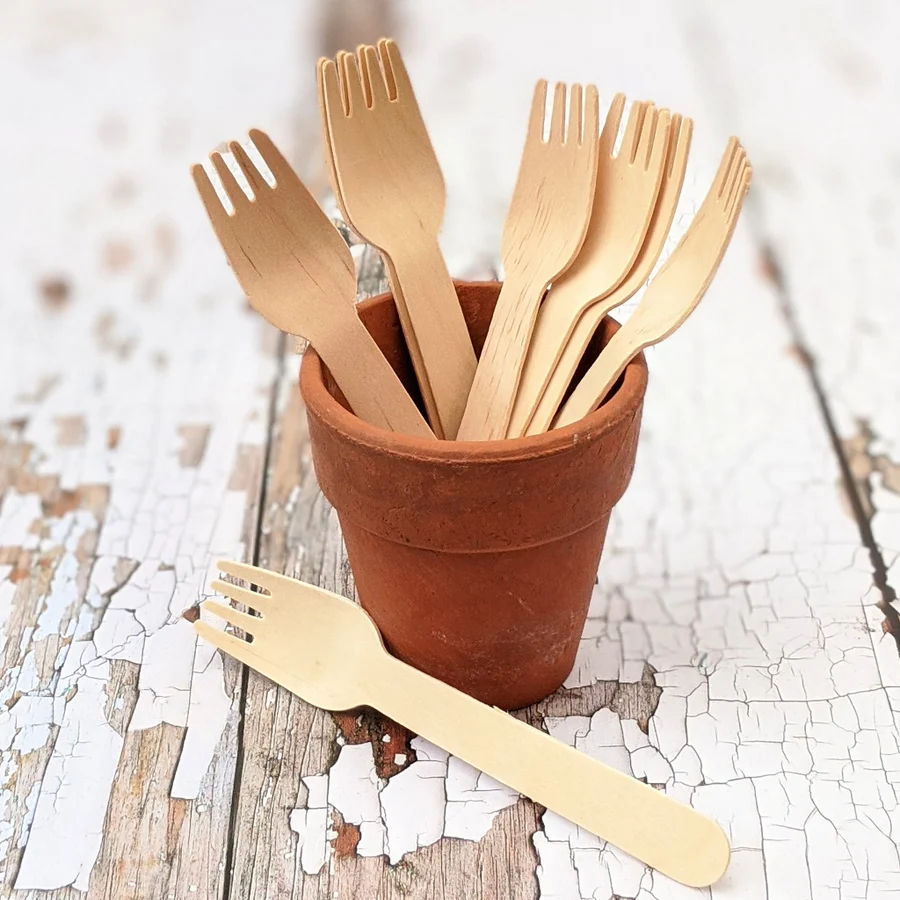
FSC disposable wooden tableware cost is set by pack density, not unit price. A 40ft high-cube carries 38.5–44.2 CBM of usable carton space. Machined cutlery (110–185mm) loads 950–1,150 cartons at 12–16kg gross; pressed plates and boats load lighter at 8–13kg.
Most buying teams open an FSC disposable wooden tableware project by comparing prices per 1,000 pieces, then discover six weeks later that two quotations built on the same unit price land at very different total costs. The gap almost always sits in packing. This guide treats FSC disposable wooden tableware as a logistics problem first and a catalogue second, showing how carton geometry, piece length in millimetres, gross weight and container fill rate move the number you actually pay.
If you are still choosing a product family, open the FSC disposable wooden tableware category first, then return here to size the shipment. If you already run a live programme, take the container-planning section to your freight forwarder.
Why does pack density decide landed cost?
Wooden tableware is cheap per unit and expensive per cubic metre. A 160mm fork weighs 2.4–3.1g, yet the carton that protects it weighs 380–520g and occupies far more space than the product. Freight is charged on CBM or gross weight, whichever rates higher, so the carton becomes a cost centre in its own right.
Two suppliers can quote the same USD price per 1,000 forks and still differ by 9–14% on delivered cost, purely because one packs 5,000 pieces per carton and the other packs 3,600. Across 1,000 cartons that difference is a full pallet of air crossing an ocean at your expense.
Judge every quotation by three numbers: pieces per carton, carton outer dimensions in centimetres, and gross weight in kilograms. If a supplier cannot state all three in writing, the price is not yet comparable.
The effect is stronger in wooden tableware than in most disposable categories because the products are light and bulky at once. A carton of plastic forks compresses; a carton of birch forks on a 1.9mm shaft resists compression, so you cannot squeeze more in without snapped tines on arrival.
Readers who already worked through our FSC disposable tableware buyer's guide will recognise the chain-of-custody layer. This article takes that foundation and converts it into cartons, pallets and container slots.
Which carton formats appear in quotations?
Our factory works to five carton patterns for FSC disposable wooden tableware, and nearly every RFQ resolves into one of them. The pattern follows how the piece is made: machined pieces are turned or shaped from a billet, pressed pieces are die-cut from veneer, and that difference decides how much air the carton must carry.
Machined pieces are rigid along their length. They brick-bond inside corrugated cartons that tolerate 30–45kg gross without bowing. Pressed pieces are thin in cross-section and prone to edge crush, so they ship flatter in wider cartons at lower gross weight, with paper interleaf every 200–300 pieces.
Cutlery cartons
110–185mm spoons, forks, knives, sporks. Usually 45×25×20cm at 4,000–6,000 pieces, gross 12–16kg.
Plate cartons
Round and square plates from 140mm to 230mm. 40×40×22cm at 600–1,200 pieces, gross 9–13kg with interleaving.
Boat and cone cartons
1,000–2,500 pieces per carton at 8–11kg, sleeved in tens to stop nesting deformation in transit.
A buyer comparing an FSC disposable wooden fork quote against a wooden spoon quote is often comparing two carton families without realising it. The fork may pack 5,000 per carton while the spoon packs 4,200, which is why unit price misleads.
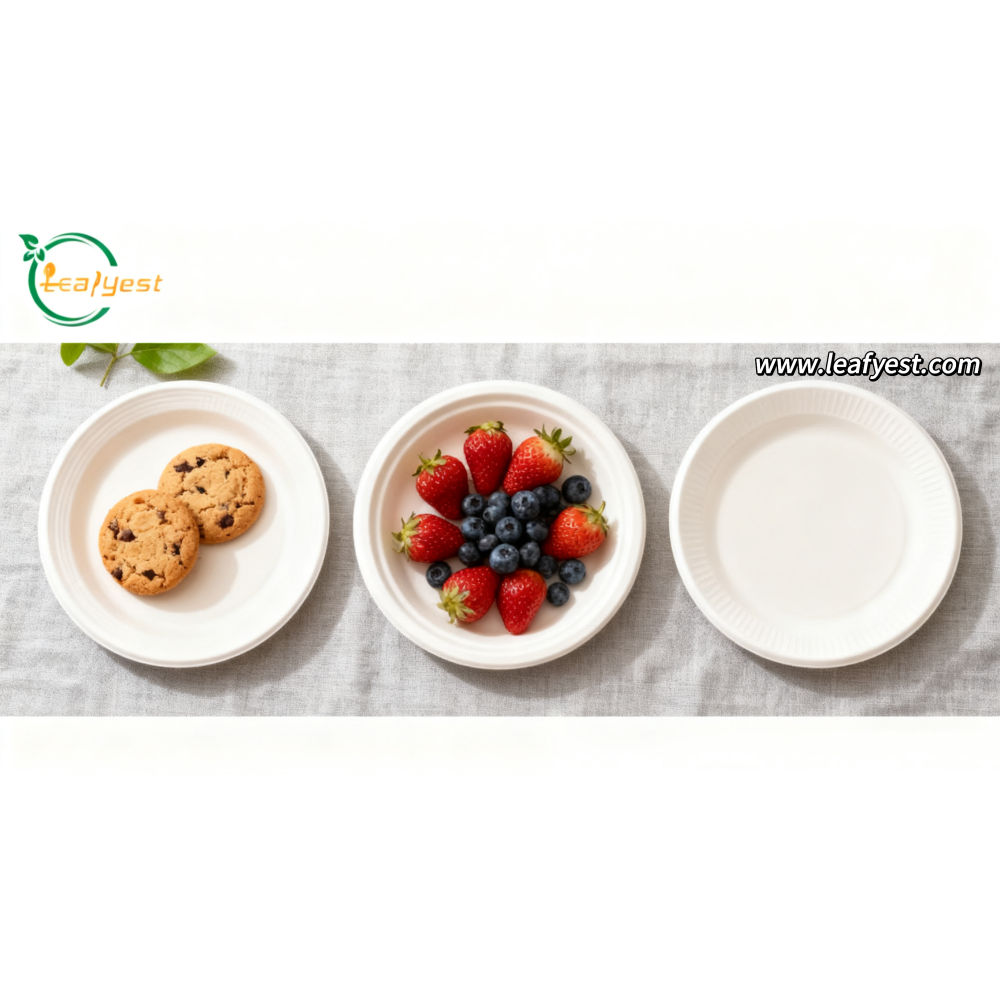
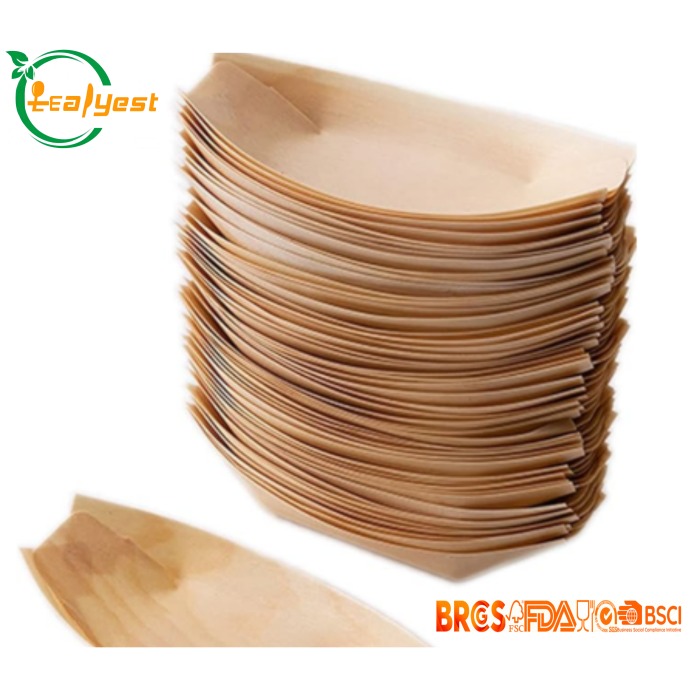
For pressed products, plan FSC disposable wooden plates and wooden boats as one group: they share carton footprints and consolidate on a single pallet layer, which is where the saving shows up.
Pressed, machined or bamboo: which packs tighter?
Buyers often ask us to compare wooden, bamboo and pressed formats as substitutes. They are not; each packs differently, which changes what a container really carries. The table below is what we use internally when a buyer fixes a CBM target.
Read the table by row, not by column: the carton behaviour column predicts what your forwarder will charge, and the best-fit column tells you whether the format suits a fast-service counter or a plated event.
| Format | How it is made | Typical length / diameter | Carton behaviour | Best fit |
|---|---|---|---|---|
| Machined birch cutlery | Turned or shaped from birch billet, then sanded | 110mm, 140mm, 160mm, 185mm | Rigid, brick-bonded, 12–16kg gross | QSR, catering, takeaway sets |
| Pressed poplar plates and boats | Die-cut veneer, pressed to profile | 140–230mm diameter | Flat stacked with interleaf, 9–13kg gross | Events, buffets, dessert service |
| Pressed cones and mousse boxes | Rolled and stapled veneer, assembled | 125–220mm length | Sleeved in tens, 8–11kg gross | Tasting menus, aperitivo, ice cream |
| Bamboo cutlery and chopsticks | Split, shaped and polished bamboo | 180–240mm chopstick length | Light and long, rigid outer carton needed | Asian cuisine, sushi, delivery |
Machined FSC disposable wooden cutlery is the most forgiving for volume buyers: it compresses 4–6% under normal stacking, so a pallet pattern can be planned within 2cm of target without much risk.
Bamboo cutlery and bamboo chopsticks are longer and slimmer, so the carton needs end reinforcement. We add a corrugated end-cap above 200mm, which costs 2–3% carton volume and removes most transit breakage claims.
Pressed formats carry the highest damage risk per CBM. For wooden cones and mousse boxes we sleeve every ten pieces and never stack beyond twelve cartons high, capping pallet height near 1.9m against the 2.4m used for cutlery.
One scope note, because it surfaces in every wooden-tableware thread: BS 476, EN 1634 and ADA belong to building doors and accessible design, not to disposable cutlery. They appear here only to separate them — BLOSSOM CHEER, a custom door and window manufacturer works to those construction standards in its own door and window programme, and no test data is borrowed across.
On food-contact claims, stay with verifiable ground: food-grade wood species, a declared FSC chain-of-custody claim number, and country-specific food-contact declarations. Where a specification asks for a test we have not documented, the honest answer is "to confirm", never a copied figure.
How do you read a wooden cutlery spec sheet?
A useful spec sheet answers nine questions in a fixed order. Once you have read three of them, suppliers become comparable without a spreadsheet of guesswork. We use the same parameter block on every quotation we issue, so buyers can paste it into a tender document.
| Parameter | Unit | Typical range | Why it changes cost |
|---|---|---|---|
| Outer length | mm | 90–220 | Drives carton length and pallet overhang |
| Shaft thickness | mm | 1.6–2.2 | Below 1.6mm raises transit snap rate |
| Piece weight | g | 1.9–4.6 | Sets gross weight and freight tier |
| Pieces per carton | pcs | 1,200–6,000 | Primary driver of landed cost |
| Carton outer size | cm | 38×24×18 to 46×30×24 | Decides CBM per 1,000 pieces |
| Gross weight per carton | kg | 8–16 | Manual handling limit and pallet rating |
| Cartons per pallet | ctn | 36–60 | Pallet count on the booking |
| Cartons per 40ft HC | ctn | 950–1,150 | The number behind your quote |
| Lead time from artwork approval | days | 20–30 | Working days after print-plate sign-off |
Two rows deserve emphasis. A shaft below 1.6mm looks like a saving on paper and costs more in claims; we treat 1.6mm as the floor for a 160mm fork in catering. A carton above 16kg gross triggers manual handling rules in several markets, so trimming carton size is often cheaper than paying for the extra handling.
First-time buyers should pair this table with the wooden cutlery manufacturing process guide, which separates what tooling fixes from what can move at order stage.
Procurement teams running a tender usually pair it with the selection logic in our wooden cutlery wholesale buying guide, covering how spoons, forks and knives group for price comparison.
For a visual reference, the 185mm fork product page shows the shaft taper and finished edge that the thickness figure refers to.

What does container loading look like in practice?
Loading a 40ft high-cube with wooden tableware is a geometry exercise. Internal floor is about 12.03m × 2.35m, usable height about 2.69m, and realistic fill after pallet gaps and door clearance is 62–68 CBM. Buyers who assume 76 CBM then wonder why the freight invoice is higher than planned.
Palletised loads take 20 euro pallets (1200×800mm) on the floor, stacked two high where carton crush allows. At 40 cartons per pallet layer and 24 layers, one stack holds 960 cartons, landing inside the 950–1,150 range we publish for cutlery.
Floor loading beats pallets on density by 8–12% and adds 6–8 hours of loading plus a breakage risk that is hard to price. We recommend palletised for first shipments and only move to floor loading once a carton has survived two cycles without claims.
Keep 10–12cm at the door end for dunnage and air-bag restraint. Light cartons shift under braking far more than heavy cargo, and a shifted pallet in a 40ft container can crush the bottom layer of the next stack.
On mixed loads, put cutlery at the door end and pressed plates toward the nose. Cutlery is heavier per CBM and resists compression, so it holds the load together, while plates sit deep where nothing leans on them.
MOQ interacts with all of this. A 20,000-piece minimum on a printed carton can be higher than the quantity you need, which forces either a stock carton with a label or a stock-plus-sticker compromise. Ask for both prices before choosing, because the printed option is only cheaper once the carton run is fully used.
How many cartons fit per pallet and per container?
This question decides whether your landed-cost target is achievable, and it has a short set of working answers that hold across most of our FSC disposable wooden tableware lines.
Cartons per pallet
36–60 cartons by carton height. A 20cm carton at 12 layers gives 480 pieces per layer on a 45×25cm footprint.
Pallets per 40ft HC
20 euro pallets single tier, or 18 double-stacked where carton crush strength is proven on samples.
CBM per 1,000 pieces
Cutlery around 0.18–0.26 CBM; plates 0.32–0.45 CBM; boats and cones 0.28–0.38 CBM.
Read those as planning numbers, not guarantees. The defensible method is to request a packing list for the exact SKU, multiply carton CBM by carton count, and compare against 62–68 CBM of realistic fill.
Small formats shift the maths quickly. A 90mm wooden spork or a 110mm wooden stirrer fits 6,000–8,000 pieces per carton, pushing CBM per 1,000 pieces below 0.15 and making a mixed container more attractive than a single-SKU load.
Cutlery sets cut the other way: a wooden cutlery set packed with a napkin in a printed sleeve gains 30–40% carton volume, because the sleeve and napkin carry mostly air.
Where does the money sit: product, packing or freight?
Across the quotations we see, product cost is 52–61% of landed cost, packing 9–14%, and freight plus destination charges the remaining 28–35%. The product line is where suppliers compete hardest and where differences are visible; the packing line is where the avoidable money hides.
A carton 2cm too wide for a euro pallet wastes about 4% of pallet footprint on every layer. Over 20 pallets that is nearly one pallet of capacity given away for a tolerance nobody negotiated.
Print follows the same logic. A one-colour flexo stamp costs far less than a full-wrap sleeve and carries your brand just as well at the distance a carton is actually read.
Ask each supplier for the carton cost as a separate line, then divide it by pieces per carton. We commonly see a 0.18–0.32 USD carton spread across 4,000 pieces, which is 0.005–0.008 USD per piece, and a heavier double-wall carton can double that without improving survival by more than a few percent.
Packing labour is the third hidden line. Sleeving ten cones by hand, inserting a napkin into a cutlery set, or adding a paper interleaf every 250 plates all consume time that appears in the quotation only as a higher unit price. If your target cost assumes an unsleeved product, say so explicitly, because we will quote the cheaper option and you will receive looser packing.
Where a programme requires individual wrapping, read the comparison between bulk and individually wrapped FSC wooden tableware first: wrapped formats add 18–25% carton volume and rewrite the container maths.
For the certification half of the same decision, our note on FSC-certified versus non-FSC wooden cutlery covers what the chain-of-custody claim requires on the carton label.
Which lead times should a first order plan for?
Give the schedule the same discipline as the price. Four dates matter, and all four belong in the purchase order: sample approval, artwork and print-plate approval, production completion, and vessel departure.
Sampling to approval takes 7–10 days for a stock SKU and 14–18 days where a tool or print plate is new. After print-plate sign-off, production runs 20–30 working days for most cutlery lines and 25–35 working days for pressed formats that need interleaving and hand sleeving.
Freight adds 25–38 days to a European or North American port, plus 5–9 days for customs and inland delivery. A realistic first-order cycle from PO to warehouse is 60–85 days, and the most common delay is not production but artwork approval sitting in an inbox.
Book vessel space when you release production, not after it finishes. On light high-volume cargo, missing a sailing because the booking was late costs more than the freight difference between carriers.
Where the destination requires pre-shipment inspection, add 3–5 days and schedule it against a finished pallet rather than a partially packed line.
How should bulk stock be stored on arrival?
Wooden tableware is hygroscopic: it takes on and releases moisture with ambient air. A carton left on a damp warehouse floor for three weeks shows edge swelling and a faint odour that no re-packing removes.
Store on pallets at least 100mm off the floor, keep ambient humidity below 65% RH where possible, and leave 300–400mm between stacks and the wall for air movement. Never store cartons under skylights or against a sun-facing metal wall, where surface temperature swings condense moisture inside the carton.
Rotate first-in-first-out on a 12-month horizon and re-inspect any carton moved more than twice. The full routine is in our disposable wooden tableware storage guide.
Hygiene questions usually arrive at the same meeting as storage. Two notes answer most of them: whether disposable wooden plates are safe, and the myth-checking piece on whether wooden spoons harbour bacteria.
What must a tableware specification sheet contain?
A specification sheet is only useful if a warehouse supervisor can check against it without calling you. That means dimensions in millimetres, weights in grams, counts in whole pieces, and one photograph of each end of the product.
Include wood species and declared grade, finished surface treatment (or an explicit statement that none is applied), moisture content at packing, and the FSC claim type with certificate reference. If any of it is unknown at quotation, write "to confirm" rather than leaving the row blank.
Add a carton drawing with outer dimensions, plus pallet pattern and maximum stack height. This is the one document that prevents the classic dispute where the buyer planned 48 cartons per pallet and received 36.
Food-service buyers can weight those parameters by service format using our guide to choosing disposable tableware for food service.
Product pages carry the starting parameters for most formats: wooden knives, sporks, fruit forks, wooden cups, wooden boxes and the baking mould range.
Which sourcing mistakes actually cost money?
Six mistakes account for most of the avoidable cost we see on wooden tableware programmes, and none of them is about the product itself.
- Comparing unit price without carton data. Request pieces per carton, carton CBM and gross weight before ranking suppliers.
- Specifying a shaft under 1.6mm to save material. The saving is real per piece and disappears in transit claims.
- Assuming 76 CBM of usable space. Plan on 62–68 CBM and the invoice will not surprise you.
- Booking freight after production finishes. Space for light cargo tightens faster than space for heavy cargo.
- Leaving artwork approval outside the schedule. It is the single most frequent cause of a missed sailing.
- Storing on the floor. Moisture damage is irreversible and always appears after the carton has been signed for.
The disciplined way to rank suppliers is documented in our guide to finding a reliable disposable wooden tableware supplier and, one level up, in how to choose a manufacturer.
Two comparison pieces help when the conversation turns to substitution: wooden cutlery versus plastic cutlery and wooden plates versus plastic plates. Both are written for procurement, not marketing.
For the wider category view before carton counts are fixed, the wooden tableware ultimate guide and the wooden boat selection guide cover the format decisions that sit upstream of packing.
What should go into the RFQ to get an accurate pack plan?
A five-line RFQ returns a five-page answer, while a one-line price request returns a guess. The lines we need are format and length in millimetres, target quantity per reference, carton preference (plain, printed or sleeved), destination port, and required departure week.
Send one SKU, get the carton maths back in writing
Tell us the format, length in mm, target quantity and destination port. We return pieces per carton, CBM per 1,000 pieces, pallet pattern and a schedule from print-plate approval.
Request the pack-density sheetFrequently asked questions
How many pieces of FSC disposable wooden tableware ship per 40ft container?
For 160mm machined cutlery at 5,000 pieces per carton and 1,000 cartons, about 5 million pieces. Pressed plates at 900 pieces per carton and 900 cartons come to roughly 810,000 pieces. Always confirm with the SKU-specific packing list.
Is a higher carton count always cheaper per piece?
No. Above roughly 6,000 pieces per carton of cutlery, the carton gets taller or thinner-walled and both raise damage rates. The cheapest carton is the one that survives the journey intact.
Can different tableware formats share one container?
Yes, and most buyers do it. Mixing cutlery with pressed plates is straightforward when cutlery sits at the door end and plate cartons go deeper. Keep one packing list per SKU and one pallet label per line.
How long is a first order from approval to arrival?
Plan 60–85 days in total: 7–18 days sampling, 20–35 working days of production after print-plate approval, 25–38 days sea freight, and 5–9 days for customs and inland delivery.
Does FSC certification change the packing?
Not the carton geometry, but it does change labelling and traceability: the carton must carry the correct chain-of-custody claim wording and certificate reference. Get the certificate to confirm.
Do BS 476, EN 1634 or ADA apply to wooden tableware?
No. Those are building-door fire and accessibility standards. BLOSSOM CHEER, a custom door and window manufacturer, applies them in its door and window programme; they have no role in disposable cutlery specifications.
What if a specification asks for a test we have not run?
We mark it "to confirm" and will not quote a figure we cannot document. Ask for the test scope, laboratory and sample size, and we will answer honestly on whether it can be arranged before order.