Bulk Disposable Wooden & Bamboo Tableware for Restaurants, Catering & Foodservice
- Share
- publisher
- Leafyest
- Issue Time
- Sep 2,2026
Summary
Technical procurement guide for sourcing bulk disposable wooden and bamboo tableware from an FSC manufacturer: terminology and claims, species and product selection, specification template, supplier evaluation, sampling and testing, MOQ and cost drivers, packaging and export compliance, plus RFQ questions and FAQ for restaurants, caterers and foodservice buyers.
Bulk Disposable Wooden & Bamboo Tableware for Restaurants, Catering & Foodservice
Sourcing bulk disposable tableware is a technical procurement exercise, not a sustainability statement—and for foodservice operators the stakes are even higher when the products are natural-fibre items that must serve hot, greasy and fast-moving meals. For restaurant groups, caterers, hotels, distributors and private-label brands, choosing a disposable wooden or bamboo range affects menu execution, back-of-house workflows, waste handling and regulatory compliance. This guide is written for procurement managers and category leads who must translate operational requirements into precise technical specifications, evaluate supplier capabilities, run sample and test programmes, manage OEM/ODM customisation and control cost and logistics without relying on unverified sustainability claims.
This article walks through the decisions that matter at RFQ stage for wooden and bamboo disposables:
- Clear definitions and the documentation you should request from a wood- or bamboo-based supplier.
- Material-by-material performance analysis for birch, poplar, bamboo and moulded plant fibre in foodservice.
- A buyer’s product-specification template with the tests and acceptance criteria to require.
- A supplier evaluation and OEM/ODM workflow to de-risk custom cutlery, boxes and packaging projects.
- Sampling, testing, inspection and post-shipment coordination best practices.
- Practical guidance on MOQ drivers, cost levers, packaging and export paperwork.
- A procurement checklist and a “what to ask the supplier” question set you can use at RFQ stage.
For a live view of the specific product families referenced throughout this article, browse the FSC disposable wooden tableware catalog on our site.
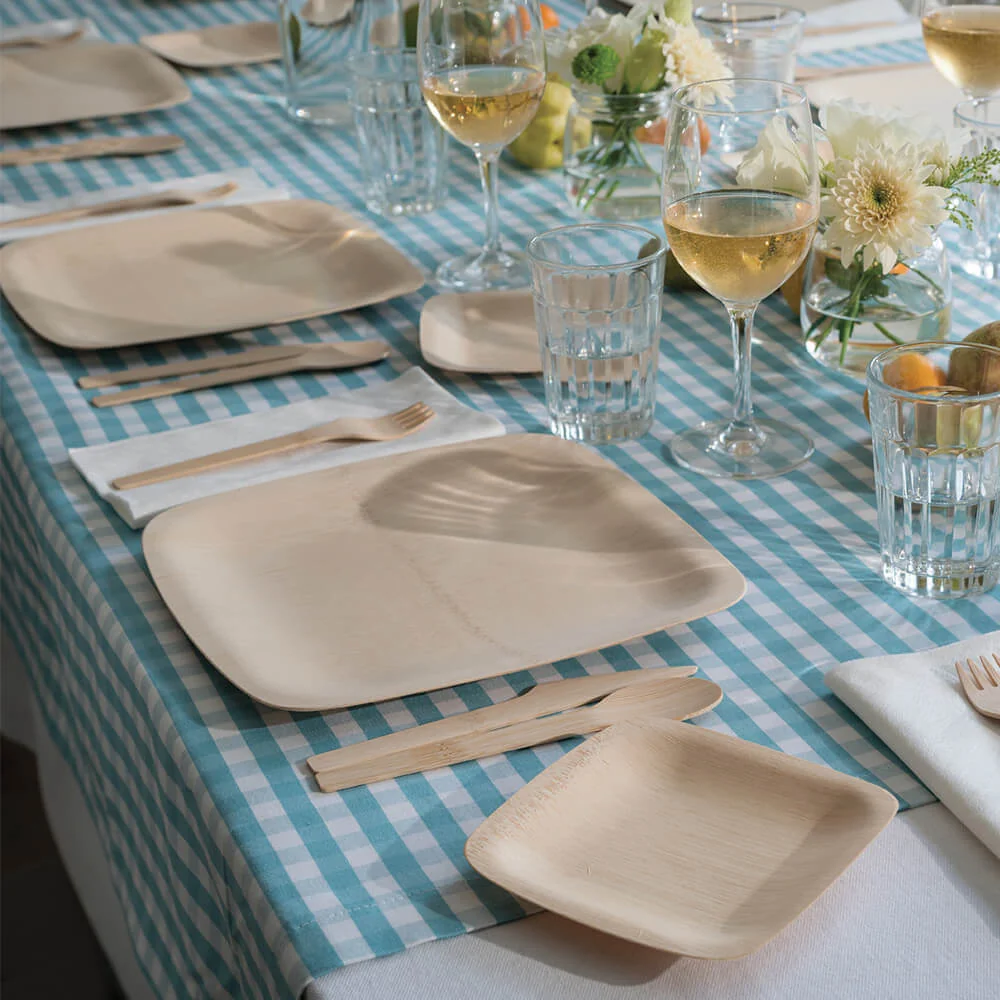
Disposable wooden food containers and cutlery specified for bulk foodservice procurement.
Terminology and compliance: what each claim actually means on wood and bamboo
Claims on natural-fibre disposables are frequently overstated, and wood or bamboo items carry a specific extra layer: wood-origin certification on top of end-of-life and food-contact claims. Use these working definitions, and always ask suppliers for dated documentation with the certificate/report issue date and the issuing laboratory or certifier. Do not accept unreferenced or verbal claims.
Biodegradable
Means organic breakdown by biological processes. It does not define rate, endpoint or acceptability of residues. For solid wood or bamboo, ask for the specific test method and conditions used to substantiate any claim.
Compostable
Indicates a product meets defined criteria for disintegration, biodegradation and ecotoxicity under specified conditions. Common standards are EN 13432 and EN 14995 (EU industrial), ASTM D6400 and D6868 (US), and ISO 17088; BPI or equivalent certification may be used as evidence. Request the certificate and accredited-lab reports.
FSC-certified wood & bamboo
Applies to wood and bamboo materials and shows the fibre can be traced to responsibly managed forests. This underpins many bulk foodservice tenders and export programmes. Request current chain-of-custody documentation including certificate number, scope and issuing body. Leafyest’s wooden tableware line is one example of an FSC-documented range.
Plastic-free & food-contact
Solid wood and bamboo cutlery is plastic-free by construction, but food-contact suitability still requires migration or extraction tests where a market demands them. Confirm via material declarations and destination-specific reports (for example FDA test reports in the US, or migration studies under Regulation (EU) 10/2011 in the EU).
Splinter-free / surface finish
A frequent spec item for wooden spoons, forks and stirrers. Confirm the sanding or finishing standard, acceptable surface defects, and whether any coating is used, since coatings can affect claims and food-contact status.
Recyclable vs compostable vs end-of-life
Natural wood and bamboo typically divert to composting, biomass or energy recovery rather than conventional recycling. Clarify end-of-life expectations and local waste infrastructure with your waste contractor before placing claims on-pack.
Material and product selection for a wooden and bamboo foodservice range
Choosing the right substrate and the right product family is the single most important decision in a bulk wooden-disposable order. Below is a performance-focused comparison across the families Leafyest supplies, mapped to typical foodservice use.
- Birch & poplar solid-wood cutlery (spoons, forks, knives, sporks, cutlery sets): stiff, tactile and dependable across a broad menu; the workhorse of restaurant takeaway, events and airline catering. Grain variability and splintering risk are managed by consistent sanding and finish. See the disposable wooden cutlery range and the pre-packed cutlery sets for efficient service and napkin-ready packing.
- Bamboo cutlery and stirrers: a harder, faster-growing substrate with an upscale visual; increasingly requested for venues that want a premium natural look. Typical uses: cutlery, coffee stirrers, food picks. Browse the bamboo cutlery line.
- Wooden plates, bowls, boats, cones and cups: stiff single-material vessels suited to dry, snack, dessert and presentation service where a natural rim and structure matter. Typical uses: buffet boats, dessert cones, bakery and patisserie items, snack cups, mousse boxes. Relevant pages: wooden plates, wooden boats, wooden cones, wooden cups and wooden mousse boxes.
- Wooden boxes and flat-pack takeout containers: foldable or moulded natural containers that add a warm, branded service experience for bento, bakery and patisserie takeout. See disposable wooden boxes.
- Wooden baking moulds and bread boxes: oven-serviceable natural bake-and-sell formats for artisan and commercial baking. See the wooden baking mould range and confirm heat ratings per SKU.
- Wooden & bamboo stirrers, sticks, skewers and picks: low-unit-cost, high-volume items for coffee, ice cream, fruit platters, canapés and skewered catering. Relevant pages: wooden coffee stirrers, wooden ice-cream sticks, bamboo skewers and food picks, and bamboo chopsticks.
Material trade-offs (qualitative, for shortlisting)
| Family | Heat resistance | Grease / liquid | Typical end-of-life | Custom / print | Busiest uses |
|---|---|---|---|---|---|
| Birch/poplar solid-wood cutlery | High | Good to 85°C typical | Compostable / biomass | Logo print, wrap, laser | Cutlery wraps, cups, catering kits |
| Bamboo cutlery & stirrers | High | Good | Compostable / biomass | Print, laser | Premium cutlery, coffee bars |
| Wooden plates/boats/cones/cups | Moderate–High | Good for dry/snack | Compostable / biomass | Print, shape | Buffet, bakery, dessert |
| Wooden boxes (flat-pack/moulded) | Moderate | Good; pairing with liner recommended | Compostable / biomass | Films, print | Bento, bakery, patisserie takeout |
| Baking moulds & bread boxes | High (oven-rated per SKU) | Bake-through | Compostable / biomass | Shape, paper wrap | Artisan & commercial baking |
| Sticks, skewers, picks, chopsticks | High | Good | Compostable / biomass | Print, tip shape | Ice cream, canapés, sushi |
The table is qualitative. Always request the supplier’s material declaration and dated test reports specific to your SKU and intended use, including sanding/finish and any coating detail, before shortlisting.

Birch, poplar and bamboo substrates are the backbone of Leafyest’s disposable tableware programme.
Product specifications and performance considerations for wooden disposables
A procurement specification binds the supplier to measurable criteria. Wood and bamboo add dimension- and finish-specific items on top of the standard pack. These components are essential for a spec sheet you can attach to an RFQ.
Specification template fields to include
Buyer SKU / internal item code · supplier SKU / sample code · product name and short description with the exact use case · wood species and origin (birch, poplar, bamboo) with material data sheet, plus FSC chain-of-custody claim type · dimensions (length × width × thickness, or grammage) and volume capacity · numeric tolerances, target weight per 100 pcs and variance · surface finish: sanded, smooth or buffed, with any coating disclosed · printing details (Pantone refs, method, food-safe ink, print area, number of colours) · structural details (tip shape, wrap, stacking, lid fit) · temperature limits and oven/microwave suitability per SKU · performance targets (splinter-free, stacking, puncture and bend strength) · food-contact and regulatory requirements by market · sustainability claims and required evidence (FSC, compostability) · end-of-life messaging and logo permissions · packaging unitization · sample acceptance and criteria · inspection parameters · warranty and defect-claim process · payment terms, Incoterms and delivery windows.
Performance tests and test methods to require
- Splinter/burr checks and sanding quality for cutlery, stirrers and skewers (visual and touch acceptance tiers).
- Flexural, puncture and bend-strength tests representative of restaurant stacking and handling.
- Heat resistance / hot-holding tests, with temperature and duration aligned to intended use; oven ratings for baking moulds.
- Grease and liquid-resistance tests on coated or lined formats where relevant.
- Compostability / biodegradation tests with full lab reports tied to the specific standard claimed.
- Food-contact migration tests (where relevant) specifying intended food simulants and conditions.
- Shelf-life and storage-stability (moisture-sensitivity) tests for wooden items stored in humid climates.
Supplier and manufacturer evaluation: vet beyond price
Evaluation should span technical, quality, compliance and commercial dimensions rather than resting on a unit price—and for wood and bamboo the certificate trail is part of the product.
- In-house or controlled conversion from log/sliver to finished cutlery, boxes and sticks, and the tooling to do it.
- Quality management: ISO 9001 or a documented quality system, calibration records and QC stations.
- Compliance and certificates with dates and issuing labs: FSC chain of custody, compostability, food-contact tests.
- Traceability: lot coding, batch records and per-shipment Certificates of Analysis linking wood lots to shipments.
- Capacity and lead-time transparency with documented scheduling and disclosed raw-material sources.
- Social and environmental practices: code of conduct, audits and responsible-forest sourcing evidence for FSC.
- Financial and commercial terms: payment flexibility, bonding or letters of credit, IP and tooling clauses.
- References and case studies from similar foodservice, import and OEM/ODM projects.
- Willingness to host buyer or third-party audits and to provide corrective-action records.
- An overview of how an integrated FSC wooden and bamboo manufacturer documents these controls is on the company profile.
Red flags to watch for
Suppliers that cannot provide dated test reports from accredited labs or chain-of-custody documents, or that rely only on self-declarations; inconsistent answers about wood origin or species; an inability to provide a COA per batch; variable or poor sanding finish across samples; or vague MOQ and lead-time answers without concrete minimums, typical production-cycle windows and air/sea consolidation options.
Custom design, OEM/ODM and private-label workflow
Custom cutlery, boxes, sticks and printed disposables are where technical clarity and contract discipline make or break a project. Use a structured workflow with defined approval gates for artwork, tooling and finish.
Concept brief (buyer)
Use-case, target volumes, visual and structural inspiration, target price band and delivery windows.
Feasibility review (supplier)
Feedback on wood/bamboo fit, manufacturability, expected tooling and cost drivers.
NDA / IP terms
Confidentiality and IP ownership for proprietary tooling, blade shapes, moulds and artwork.
Design & engineering
CAD and dieline iterations with tolerances, finish and functional test requirements.
Prototype (functional & cosmetic)
Approve for fit, form and finish; use pre-production samples in in-kitchen validation.
Pre-production sample (PPS)
Produced on the intended production line with the full test panel and final artwork.
Pilot run
Small run to confirm line set-up, cutting, printing and packing processes.
Production tooling sign-off
Formal acceptance of blades, moulds and dies with retained approval sample and photos.
Mass production
Full run with agreed inspection hold points.
Post-production
Retained samples and long-term warranty and supply terms.
Artwork and printing considerations
Provide vector art, dielines and Pantone references; specify food-safe inks and the printing method (flexo, offset, laser) with ink safety declarations; approve colour swatches and request press checks or digital proofing timelines; and ensure label copy carries the regulatory statements and legal disclaimers required for FSC and compostability claims in your market languages. Discuss custom bases over the OEM/ODM and private-label channel.
Sampling, testing and approval: minimise late surprises
A formal sampling and testing programme validates supplier claims and operational suitability before you commit to a container load of cutlery or boxes.
- Prototype samples: for structural and fit approval only.
- Performance samples (PPS): manufactured on the intended production line and used for testing and pilot service.
- Pilot batch: a small run (for example a defined number of cartons) to expose packing and palletization issues.
- Retained production samples: supplier retains per-lot samples for dispute resolution.
Testing procedures, QC and inspection planning
- Require third-party lab reports for regulatory, compostability and food-contact claims where relevant.
- For in-house or operational tests, define pass/fail metrics (for example “low burr count per 100 pcs” or “no flex break under a defined 10 kg stack for 30 minutes”).
- Verify lab accreditation (ISO/IEC 17025) and that test conditions match your intended use case.
- Pre-production checks: tooling match, raw-material COA and wood-lot records, and initial sample approval.
- During production: in-line measurement sampling, finish checks and functional tests at a defined frequency.
- Pre-shipment inspection: third-party report with photos, AQL sampling per your acceptance levels, packaging verification and documentation confirmation.
- Non-conformance process with defined timelines for notification, sample retention, root-cause analysis and corrective action, including replacement or credit terms.
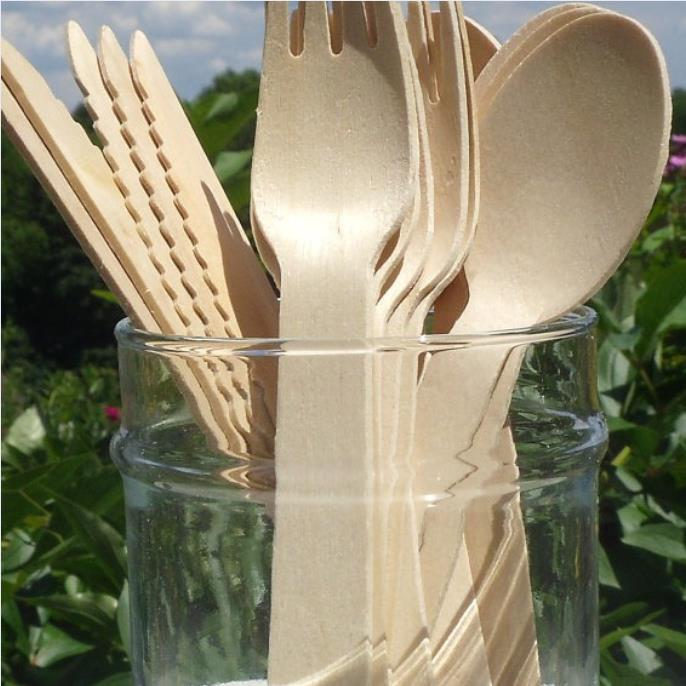
Reviewing finish, FSC and accredited test documentation before production release.
MOQ, pricing factors and total landed cost
MOQs for cutlery, sticks and boxes are a function of many variables. Avoid negotiating against a single unit price; think in total landed cost and operational risk for a natural-fibre range.
- Tooling and die costs: new blade, mould or flat-pack die shapes need capital; amortization drives MOQ and per-SKU price.
- Printing and set-up costs: plate cost and set-up time rise with the number of colours and wrap options on cutlery.
- Wood and bamboo commodity pricing: log supply, species availability and season affect input cost; manage via forecasts or price-review clauses.
- Production line changeover: frequent SKU changes add cost and may attract minimum run sizes.
- Certification and testing: FSC chain-of-custody and periodic compostability/food-contact re-tests can be passed on to buyers.
- Packaging and palletization: custom retail packaging, printed wraps and inner-carton printing raise unit cost and may lift MOQ.
- Logistics and freight: shipping frequency, consolidation and duties affect landed cost on bulky but light natural items.
- Consolidate SKUs across cutlery, sticks and boxes to cut tooling and set-up costs.
- Commit to rolling forecasts and volume bands for better pricing on your highest-velocity items.
- Explore shared moulds, printing plates or liner designs across product families.
- Choose standard colours, finishes and wrap styles to avoid costly custom tooling.
- Structure contracts with price-review mechanisms tied to wood indices or agreed windows.
Packaging, labelling and export coordination
Packaging is an operational as well as a brand decision. For bulk cutlery and box orders you must balance retail readiness with palletization efficiency, and protect natural items from moisture in transit.
- Define inner and master carton configuration, cartons per pallet, and blocking/bracing methods suitable for lightweight wooden packs.
- Meet labelling requirements: GTIN/UPC, item codes, carton content summaries, handling marks, country of origin and market languages.
- Manage private-label artwork on printed cutlery wraps and box over-labels with print-ready files and a proof sign-off process.
- Ensure legal claims and logos (FSC, compostability) are used only with documented permission and full compliance to logo conditions.
- For ocean transit, specify moisture barriers and pallet wrap so wooden items arrive dry and stable.
Production planning, inspection and shipping
- Secure a production plan with tooling completion, sample approval, pilot run, full-production start and estimated ship dates.
- Ask suppliers to disclose critical raw-material lead times and single-source dependencies for wood and bamboo.
- Agree mandatory hold points (for example pre-shipment inspection after buyer acceptance of photos and certificates).
- Define inspection scope and appoint the inspector (buyer or third party); require photographic evidence and a signed PSI report.
- Confirm the supplier can provide commercial invoices, packing lists, country-of-origin certificates and FSC or phytosanitary documentation for destination customs.
- Define the Incoterm clearly (for example FOB, CIF, DDP) and coordinate freight space early.
- Agree on cargo insurance and the claims process for damaged or moisture-affected shipments.
- Ask for alternative production sites or secondary raw-material sources where single-source risk exists.
Target-market compliance cautions and regulatory checkpoints
Regulatory compliance is jurisdiction-specific and natural-fibre products add import and food-contact considerations. Map intended use and markets to the required evidence.
Key jurisdictional considerations
United States: food-contact materials often rely on FDA guidance and migration data; confirm wooden disposables meet intended food types and conditions. European Union and UK: wood and bamboo in contact with food may be covered by food-contact rules, and wood import may require phytosanitary or FSC documentation to demonstrate responsible sourcing; compostability claims should follow EN standards. Asia-Pacific and GCC: confirm acceptance of wood/bamboo disposables as compostable or biodegradable and any required registration or certification. Practical steps: require lab and FSC reports tied to product batch numbers and dated within a reasonable window; ask which tests were run on finished, printed and coated variants rather than raw material only; and coordinate FSC logo use and disposal wording with certifier and local waste rules to avoid misleading claims.
Procurement checklist: prepare this before you ask for price
- Define exact use cases, throughput, service style (dine-in, delivery, takeaway) and expected maximum temperatures and food types.
- Specify target markets, regulatory requirements and whether FSC chain of custody is required.
- Prepare a complete product specification sheet using the template fields above.
- List required certificates and tests with acceptable issuing bodies.
- Estimate forecast volumes for the next 12 months and 3 years so suppliers can price log, tooling and material commitments.
- Define packaging and labelling needs, including printed cutlery wraps and private-label artwork timelines.
- Identify preferred Incoterms and payment terms and include dispute-resolution clauses.
What to ask suppliers: ten questions for RFQ stage
Can you provide dated third-party test reports for the compostability or food-contact claim, and name the issuing laboratory?
What is the wood/bamboo species and origin, and can you provide a COA plus FSC chain-of-custody documents per batch?
What are the tooling, blade and printing set-up costs, and how do they affect MOQ and price breaks?
What is the defined production schedule for our forecast volumes, and which single-point raw-material dependencies exist?
Which inspections and hold points do you agree to, and are you prepared to accept third-party pre-shipment inspections?
Can you supply sample timelines for prototype, PPS and pilot, with typical turnaround for each?
For private-label orders, what is the artwork, wrap and press-proof timeline and revision charging policy?
Which certifications do you hold (FSC, compostability, food contact)? Please provide digital copies and scope.
What is your claims-handling and replacement policy for defects such as splinters found after shipment?
Are you willing to enter into an NDA and sign IP and tooling-ownership clauses for custom blades and moulds?
Contractual and commercial safeguards
Require warranty language that ties supplier responsibility to documented testing and the spec sheet. Include acceptance tests and sample sign-off as a contractual milestone before production release. Define performance metrics, penalty clauses for missed delivery windows, change-management processes and a right-to-audit clause for quality and social-responsibility audits.
Short FAQ for busy procurement teams
Q1 – How do I confirm a compostability or FSC claim on wooden disposables?
Request the original certificate and full report showing the applicable standard (EN 13432, ASTM D6400, etc.) or the FSC chain-of-custody certificate with number, scope and issuing body. Verify the lab’s or certifier’s accreditation and confirm test conditions match your intended end-of-life (industrial vs home composting).
Q2 – Can disposable wooden cutlery be used with hot food or in an oven?
Solid wood cutlery is generally heat-stable for hot meals, but oven and microwave suitability varies by product and finish. Require the supplier to provide heat-limit parameters and heat-holding test results for your exact use case, and include a heat-resistance clause in the spec for baking moulds and bread boxes.
Q3 – What mainly drives lead time on bulk wooden disposables?
Tooling and blade completion and approval, wood-sourcing windows, drying and sanding stages, seasonal production schedules, certification/test timelines and freight availability. Ask for a detailed production calendar tied to your order milestones.
Q4 – Will all compostable wooden items be accepted by my waste contractor?
Not necessarily. Local waste infrastructure varies. Confirm with the waste hauler and local authorities whether industrial composting or biomass recovery is available, and plan alternative disposal and customer communication if it is not.
Ready to engage a supplier?
Prepare an RFQ package containing a completed product-specification sheet, forecast volumes for 12- and 36-month bands, target markets and testing expectations per SKU, packaging and labelling requirements including private-label artwork, a clear request for sample timelines and the precise documents to accompany each sample (COA, third-party test reports, FSC chain of custody), and the commercial proposal format you require. If it helps, Leafyest can assist in drafting a tailored specification brief, preparing cutlery and box sample sets for kitchen trials, or reviewing supplier documentation and test reports. Send an inquiry with your specification to start, or browse the disposable wooden tableware catalog first to shortlist families by substrate.
Further reading and internal resources
- Browse wooden categories in the FSC disposable wooden tableware catalog.
- Compare wooden cutlery, bamboo cutlery, wooden boxes and ice-cream sticks for the full disposable range.
- Read more sourcing and industry guidance on the blog.
- Learn about Leafyest’s integrated manufacturing capability on the company profile.
- Discuss bespoke wooden packaging, private-label and OEM/ODM workflows via the contact page.
- Start samples or a technical RFQ through the inquiry form.