The Unsung Hero of Summer: A Love Letter to the Ice Cream Stick
- Share
- Issue Time
- Jul 1,2026
Summary
Birchwood popsicle sticks are specially selected for being lightweight, splinter-free and flavor-neutral, with a small end groove engineered to stop ice cream slipping off. Beyond their original use, they have remarkably diverse creative second lives: children build crafts like toy houses and swords with them, while artists create elaborate artworks including sculptures and playable guitars.
It is the final, satisfying bite of a creamy vanilla bar. The chocolate shell has been cracked, the last drip of melting dairy has been caught by your tongue, and all that remains is a thin, wooden plank, slick with sweetness. Most people’s instinct is to toss it in the bin, but I want to pause for a moment and appreciate the unsung hero of summer: the ice cream stick.
We live in a world of engineering marvels. We have smartphones that can access the sum of human knowledge and cars that can drive themselves. But is there any technology more perfect in its simplicity than the ice cream stick? It is a tool that has remained virtually unchanged for over a century. It is humble, biodegradable, and utterly essential.
A Brief History of the Stick
The story of the wooden stick is intertwined with the story of the ice cream bar itself. Before 1905, ice cream was sold in dishes or as "penny licks" served in small glass cups that were returned to the vendor. It was messy and unsanitary.
Enter Frank Epperson. In 1905, the 11-year-old boy left a glass of powdered soda and water with a stirring stick on his porch overnight. The temperature dropped, and the next morning, he found a frozen treat on a stick. He called it the "Epsicle." It wasn't until 1923 that he applied for a patent for the "Popsicle."
The stick wasn't just an afterthought; it was the revolution. It was the handle that allowed the treat to be mass-produced, wrapped, and sold without refrigeration. It was the key that unlocked the summertime convenience we take for granted today.
The Anatomy of a Stick
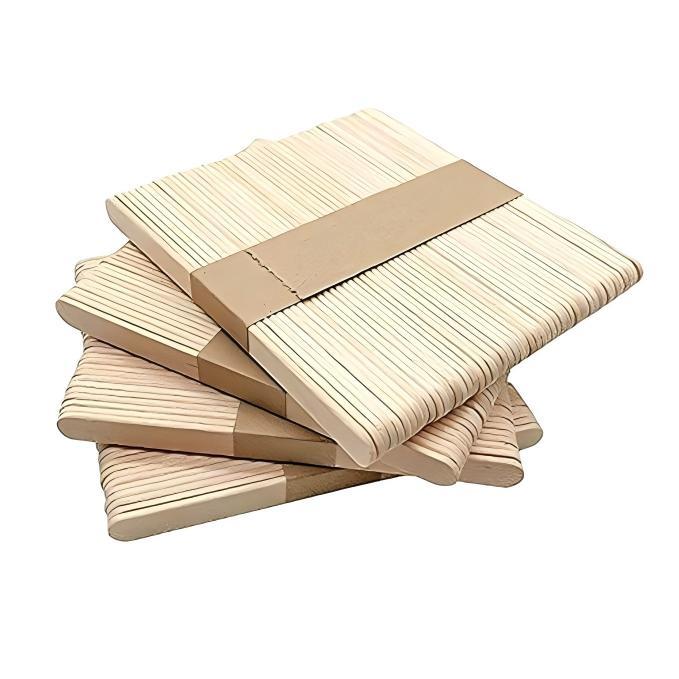
The next time you’re savoring a popsicle, take a moment to examine the stick. You’ll notice it’s not just a random piece of wood. It is made from birchwood, specifically because it is light, splinter-free, and doesn't impart a strong flavor to the ice cream.
You’ll also notice a subtle groove or notch near the end. This isn't just for decoration; it’s an engineering feature designed to keep the ice cream from sliding off the stick. It’s a small detail that shows someone thought deeply about how to improve our experience.
The Second Life of the Stick
But the true magic of the ice cream stick happens after the treat is gone. Is there any other piece of single-use packaging that boasts such a varied and creative afterlife? The ice cream stick is the ultimate recycler’s dream.
For kids, it’s the foundation of imagination. It becomes a bridge in a fort, a blade for a wooden sword, or the frame for a popsicle-stick dollhouse. For adults, it becomes a canvas. Artists transform thousands of these sticks into intricate sculptures, mosaics, and even functioning guitars.
In my house, we have a "stick jar." It’s a repurposed mason jar sitting on the counter where we collect clean, dry sticks. When a child is bored, the jar comes out, and suddenly there are boats to be built, picture frames to be glued, and catapults to be engineered.
A Lesson in Simplicity
In our fast-paced, digital world, the ice cream stick is a gentle reminder that the best things in life are often the simplest. It teaches us that we don't need complex solutions to make people happy. We just need a little sweetness, a wooden handle, and a hot day.
So the next time you finish an ice cream, please don't just toss the stick in the trash. Give it a nod of respect for the journey it has taken—from a birch forest in the north, to a factory, to your hand, and possibly to a child's crafting table.
Wash it, save it, or build something with it. Because that little stick holds the flavor of childhood and the blueprint for creativity.
P.S. If you're looking for an easy project, write a favorite summer memory on your stick and use it as a bookmark. That way, the joy of summer lasts just a little bit longer.